HISEED
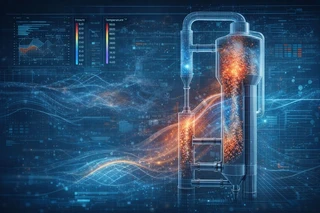
This joint research project between the University of Luxembourg and Paul Wurth S.A. focuses on advancing hydrogen-based ironmaking as a key pathway for decarbonising the steel industry. The project aims to develop a high-fidelity, high-performance computational framework capable of simulating hydrogen-driven iron ore reduction in circulating fluidized bed (CFB) reactors at industrially relevant scale and operating conditions.
Using state-of-the-art multiphase computational fluid dynamics (CFD) combined with national and HPC infrastructure (MeluXina), the project models the full CFB loop—including riser, cyclone, downcomer, and loop seal—under both non-reactive (cold-bed) and reactive (hot-bed) conditions. Advanced GPU-accelerated simulations enable the resolution of transient gas–solid hydrodynamics, particle circulation, heat and mass transfer, and heterogeneous reduction kinetics that cannot be captured by conventional reduced-order models. The resulting simulations provide detailed insight into key phenomena such as residence time distribution, pressure balance, gas utilisation, metallisation degree, and fluidisation stability under hydrogen operation.
The work is led at the University of Luxembourg by Professor Ladewig, who coordinates the development of validated CFD models, experimental benchmarking, and large-scale parametric studies. These activities establish a predictive “virtual testbed” for hydrogen-based CFB reactors, supporting process optimisation and scale-up while reducing reliance on costly pilot campaigns. Paul Wurth contributes deep industrial expertise in fluidized bed reactor design and hydrogen metallurgy, defines industrially relevant case studies, and validates simulation outcomes against process benchmarks.
Together, the partners deliver a robust digital engineering workflow that directly supports the development of next-generation low-carbon ironmaking technologies, strengthens Luxembourg’s leadership in sustainable metallurgy, and lays the foundation for future digital twins and AI-enabled process optimisation in green steel production.
This work is supported by the Luxembourg National Research Fund (FNR) under Grant 19840780, and by the Ministry of Economy of Luxembourg.

