A review of reverse osmosis membrane fouling and control strategies
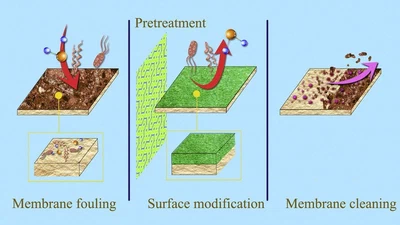
Reverse osmosis (RO) membrane technology is one of the most important technologies for water treatment. However, membrane fouling is an inevitable issue. Membrane fouling leads to …
Hydrophilic bromomethylated poly(phenylene oxide) (BPPO) ultrafiltration membranes were prepared via a single-step reaction with diethylenetriamine (DETA). The resulting DETA …
Poly(2,5-benzimidazole) (ABPBI)—a promising high-temperature polymer electrolyte membrane—is characterized over a wide range of temperature (−50 to 220 °C) using broadband …
Nafion®-117, sulfonated polysulfone (sPSF) and sulfonated polyetherketone (sPEK) are characterized using broadband dielectric spectroscopy in the frequency range of 10 MHz–100 mHz. …
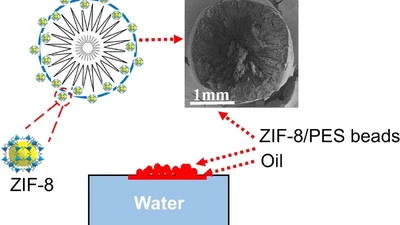
Zeolitic imidazolate framework ZIF-8 beads of 2–3 mm in diameter were prepared using a simple one-step phase inversion method. The beads were fabricated by different amounts of …
Post-synthetic exchange (PSE) and defect engineering have emerged as powerful techniques for tuning the properties and introducing novel functionality to metal organic frameworks …
The heat treatment effect on the adsorption capabilities of nanoporous carbon particles derived from Zeolitic Imidazolate Framework-8 (ZIF-8) was investigated at 600, 1000 and …
Despite the exceptional separation performance of modern glassy mixed matrix membranes, these materials are not being utilized to improve the performance of existing membrane …
Disposal of waste generated by inland water treatment technologies is highly expensive. The introduction of vibratory shear enhanced processing (VSEP) to treat waste produced from …
The ability to expose MOF pores on demand using visible light has been demonstrated and exploited for the capture and release of carbon dioxide. Coating of Mg-MOF-74 or MIL-53(Al) …