An insight into the effect of azobenzene functionalities studied in UiO-66 frameworks for low energy CO2 capture and CO2/N2 membrane separation

Abstract
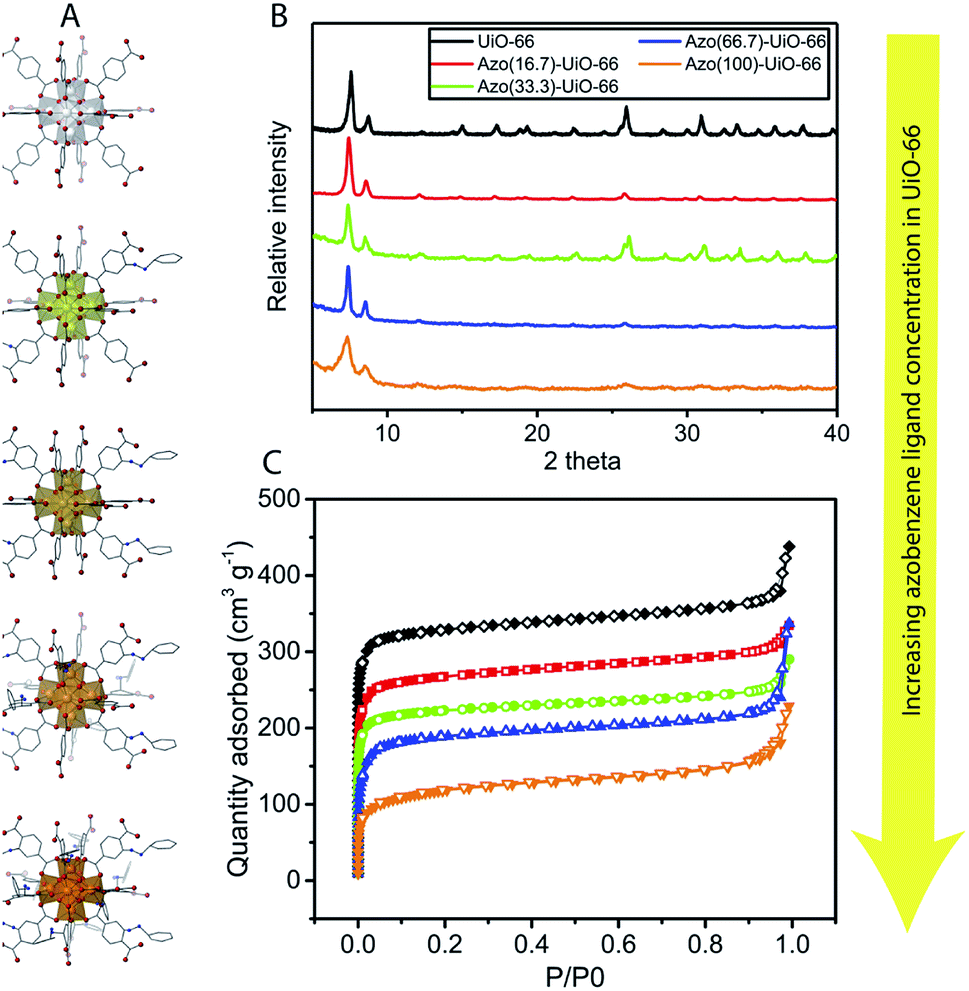
In this paper, a simple approach to study the fundamental aspect of the light-responsive metal–organic framework (MOF) in UiO-66 topology through a mixed-ligand approach is reported. Apart from change in the structural properties, the loading of an azobenzene linker inside the framework also affects the CO2 light-responsive properties and CO2/N2 selectivity which could help to design future low-energy CO2 adsorbents. Further study to incorporate MOFs into mixed matrix membranes using PIM-1 as the polymer matrix also indicates the benefits of having a higher azobenzene loading in the MOF to enhance the CO2/N2 separation performance since it can improve the separation performance that could not be obtained in non-functionalized fillers.
Type
Publication
Journal of Materials Chemistry A
